
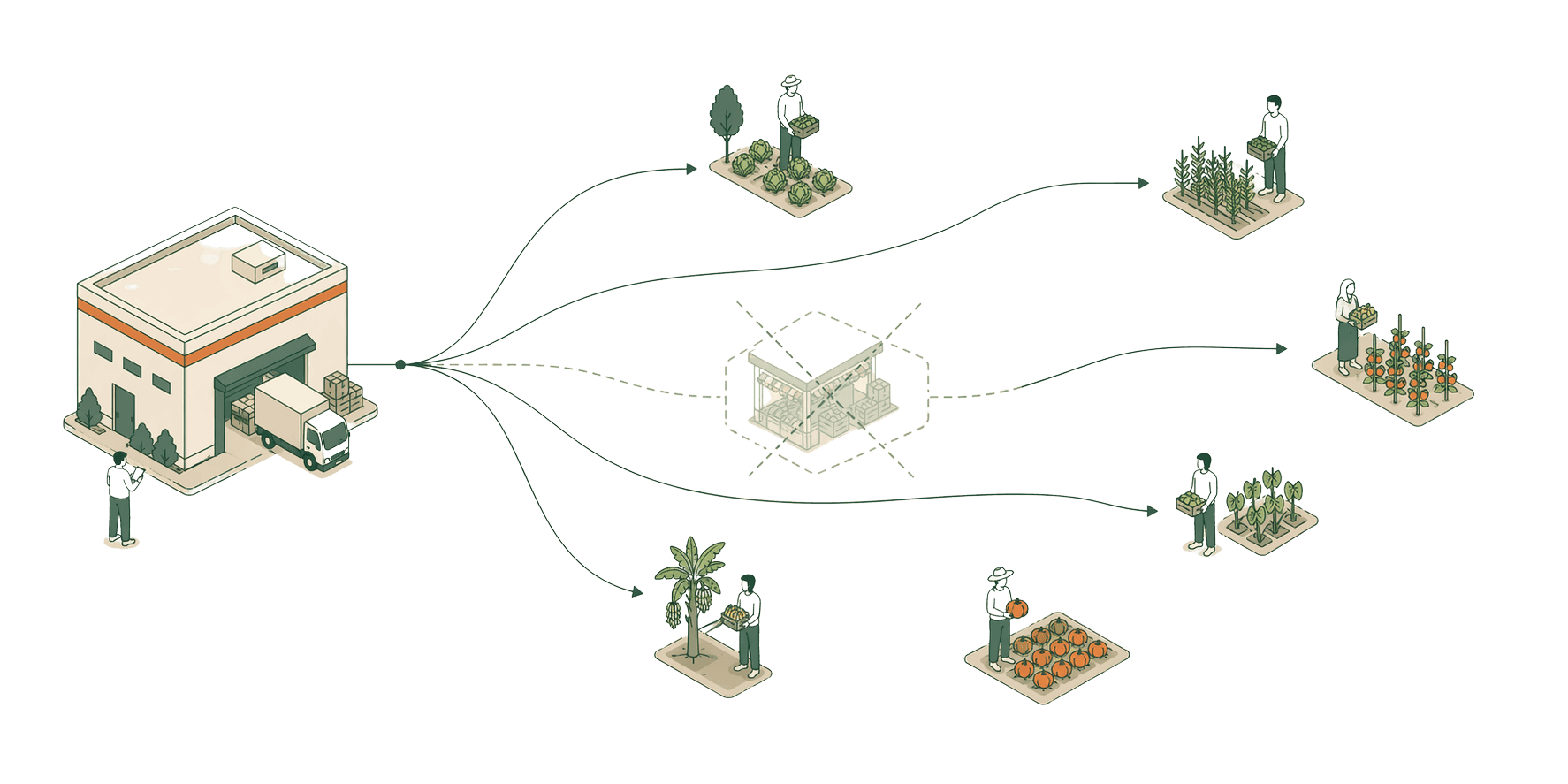
The farmer pipeline
60,000 farmers on the network need storage year-round. Fashol's hub team routes them to your facility by crop and season, in your district.
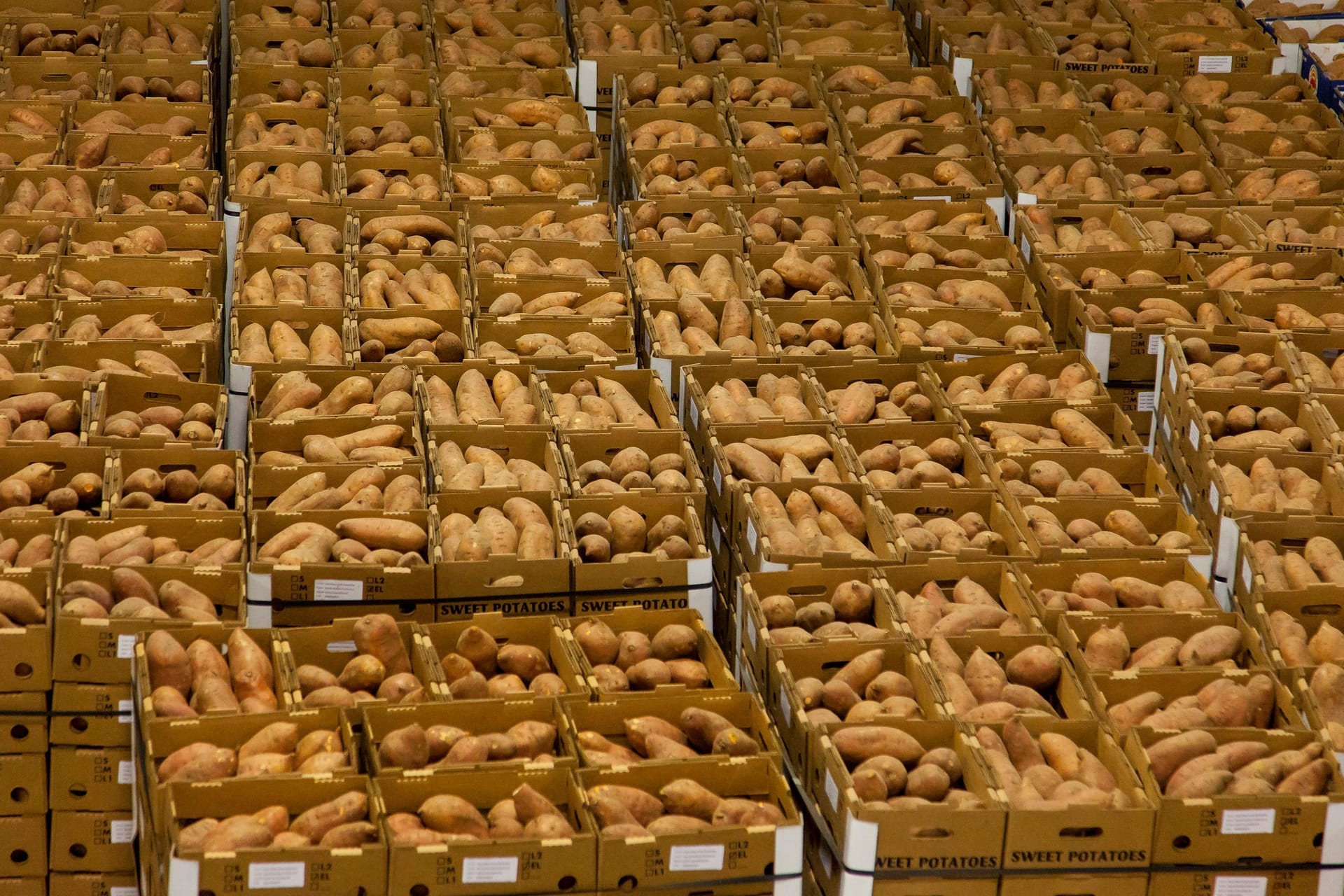
Cold storage in Bangladesh is full for three months and empty for nine. Potato comes in after harvest and leaves before the next; in between the lights stay on with no traffic. Farmers book space and skip delivery. Traders reserve slots and skip payment. Rates are set by an association, margins stay thin, and it all runs in isolation - no direct line to the farmers who need storage or the buyers who need what is stored.
The facility is built. The network around it is not.
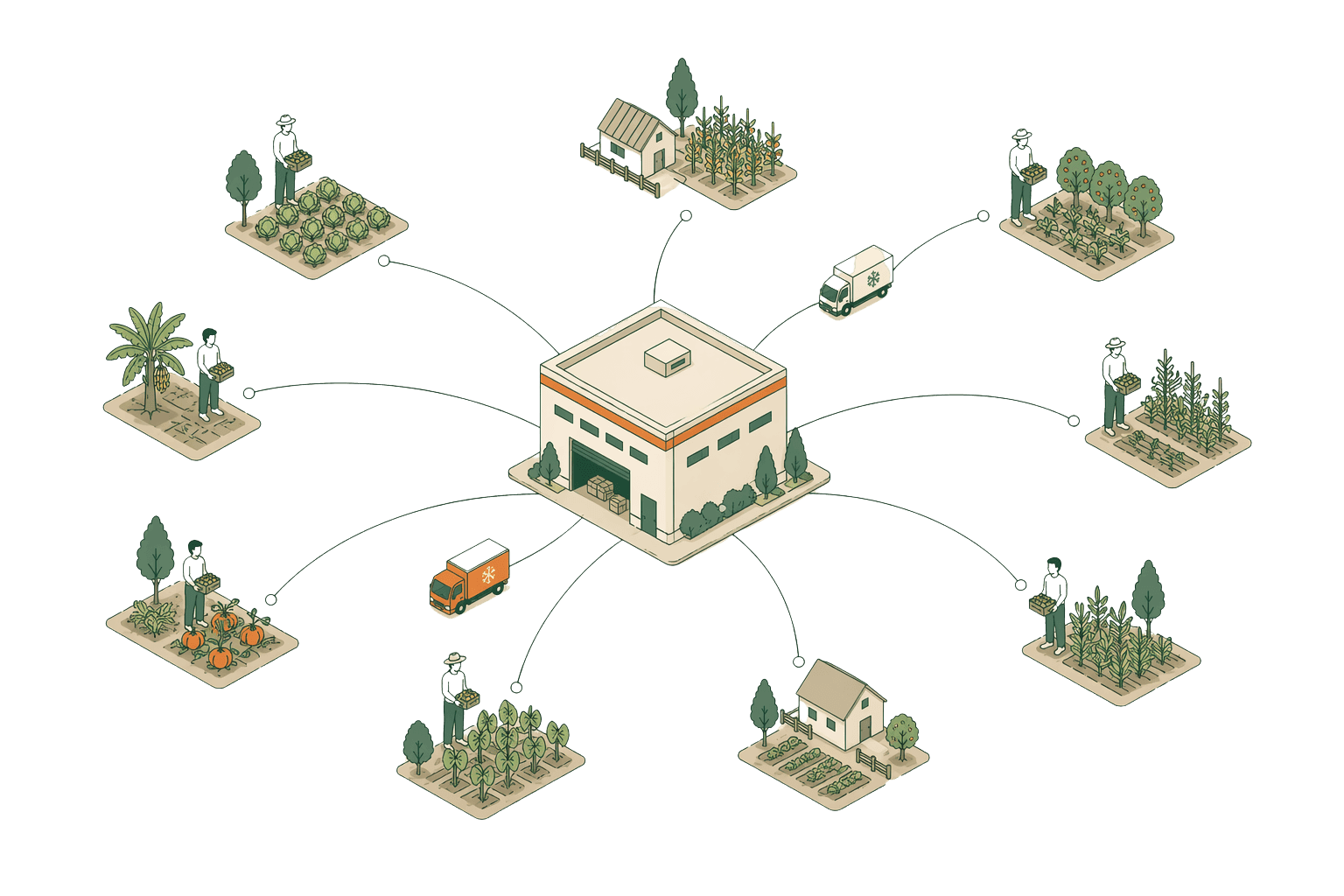
Two flows of traffic. Inbound from farmers, outbound to buyers. Underneath, a ledger that verifies bookings, forecasts volume, and clears payment across the cycle.
60,000 farmers on the network need storage year-round. Fashol's hub team routes them to your facility by crop and season, in your district.
7,000 mudi shops, 400+ restaurants, and 400+ supershop outlets order against what is in storage. Your outbound turns from cold calls into a ledger of waiting buyers.
Vegetables in summer, ginger and onion in winter, potato through spring. The calendar runs longer because the crop mix runs wider.
Every reservation is confirmed through the Fashol platform before the sacks arrive. No held slots that do not show up.
Fashol's hub team projects regional harvest weeks ahead and books against your capacity. You plan against real numbers, not phone calls.
Orders clear through the platform, reconciled against your storage records. No chasing traders for settlement.
Cold storage that sits inside the supply chain, not beside it.

Inbound from the farmer side.
Farmers booking storage through the Fashol hub route their harvest to your facility. Jogaan handles registration, volume forecasting, and booking verification.
Outbound to the buyer side.
Fashol's buyer desk places orders against inventory in your cold room. Hyperfarm runs the order flow for restaurants, supershops, quick commerce, and the wholesale trade.
“We ran the cold storage for eighteen years. Full from February to May, empty the rest. Farmers would come with potato, and after potato moved out we would wait. Now Fashol sends us ginger farmers in October, onion in December, potato from February. And when it is time to sell, their buyers come to our door. It is not the same business anymore.”
Partnership, not sign-up. A cycle of steps that sets the facility up to run networked.
We visit your facility.
Understand your capacity, your current utilization rhythm, your crop mix. Map your district against our farmer base and buyer network.
The ledger connects.
Your booking system connects to the Fashol platform. Capacity becomes visible to our inbound pipeline, inventory to our buyer desk.
Traffic begins.
Inbound farmers route through your facility, outbound orders pull from your floor. The Fashol hub team handles grading, pickup, and reconciliation.
The rhythm holds.
Pricing, volume forecasting, and seasonal planning happen together. You run a networked facility, not a rented one.
Traditional arotdars on a modern stack, with transparent pricing and digital settlement.
A modern supply stack behind the wholesale trade, with 50-district sourcing and same-day settlement.
60,000 farmers on Jogaan, selling produce with transparent pricing, same-day settlement, and access to inputs and machinery.