

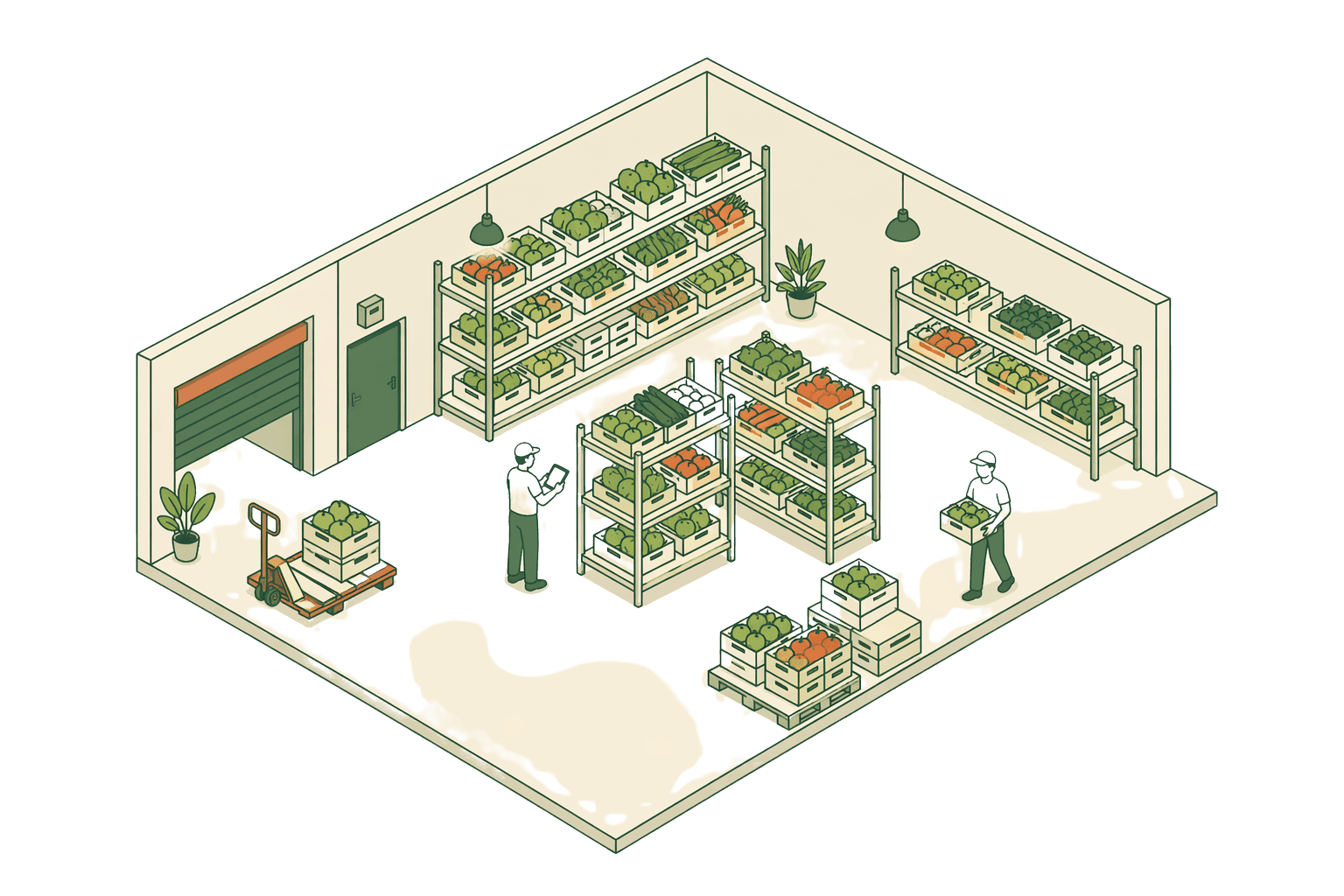
Fill rate that holds.
Above 95% fill rate on fresh produce. Dark store inventory is planned against Fashol's confirmed daily supply, not against market hopes.

Fill rate that holds, scale for festival surges, and wholesale prices that do not move mid-shift. Fashol keeps Dhaka's dark stores full, every order.
A quick commerce platform promises one thing: the order arrives fresh, within the window. Packaged goods are easy; fresh produce breaks the model. A shopper on Foodpanda or Chaldal orders tomatoes at 2 PM and expects them by 3. If the dark store ran out at noon, took them in wilted at 6 AM, or paid 40 percent more than yesterday, fill rate and reputation take the hit.
The old model runs on early-morning trips to the wholesale market - whatever the vendor had, at whatever the spot price was. Dark stores plan inventory on hope. Popular SKUs stock out weekly, and price swings force the platform to absorb the volatility or pass it to customers. Neither lasts.
Quick commerce needs a supply partner that treats fresh produce like a warehouse SKU - predictable, priced, delivered.
Fill rate on fresh produce for quick commerce platforms running on Fashol. The number a dark store operator can plan around, not hope for.
Fill rate, scale, and price stability. Every order Fashol fulfills for a quick commerce platform is optimized around these three, every day.
Above 95% fill rate on fresh produce. Dark store inventory is planned against Fashol's confirmed daily supply, not against market hopes.

Weekend spikes, Ramadan surges, Eid demand. Fashol's 60,000-farmer network absorbs surges without price chaos or stockouts. Dark stores plan campaigns knowing supply will be there.
Same-day cold-chain delivery windows to every dark store in Dhaka.

Wholesale prices locked for the delivery window. A shopper sees Tk 60 per kg at 2 PM and pays Tk 60 at checkout. The platform does not absorb hidden spot-market shifts between order and fulfillment.
SKUs across fresh produce categories, updated live on Hyperfarm.
Treated like a warehouse SKU. Priced like one. Delivered like one.
The buyer procurement desk. Quick commerce operators use Hyperfarm to forecast demand, order daily, track fulfillment, and reconcile same-day settlement.
“I was managing seven fresh produce suppliers across eight dark stores and still spent my mornings explaining stockouts to category heads. Since moving to Fashol, I manage one. My team stopped tracking SKU-level stockouts in the daily stand-up because there were not enough of them to report.”
Quick commerce runs on data and SLAs, not handshakes. Fashol's q-commerce desk onboards in a day: forecast shared in the morning, SKUs mapped to Hyperfarm pricing by afternoon, first dark-store delivery the next morning. The trade team stays embedded the first month to tune fill rate and SKU coverage.
A Fashol q-commerce representative walks through the platform's current SKU list, daily volumes, peak patterns, and delivery windows per dark store. One call, usually under an hour.
Within hours, the platform's produce list is mapped to Hyperfarm SKUs with daily pricing locked for the delivery window. The platform approves the list before it goes live.
The next morning, Fashol delivers to the first dark store. Fill rate, freshness, and delivery timing are tracked hourly for the first three days and tuned with the platform's ops team in real time.
Remaining dark stores onboard over the following days using the first store's profile as the template. Fashol's trade team stays embedded for the first month to tune fill rate and SKU coverage across the full network.
Morning delivery for 400+ restaurants including Domino's, with grading at the hub and transparent wholesale pricing.
Supply partnerships for retail chains with consistent grading and dependable volumes.
A modern supply stack behind the wholesale trade, with 50-district sourcing and same-day settlement.