Fashol
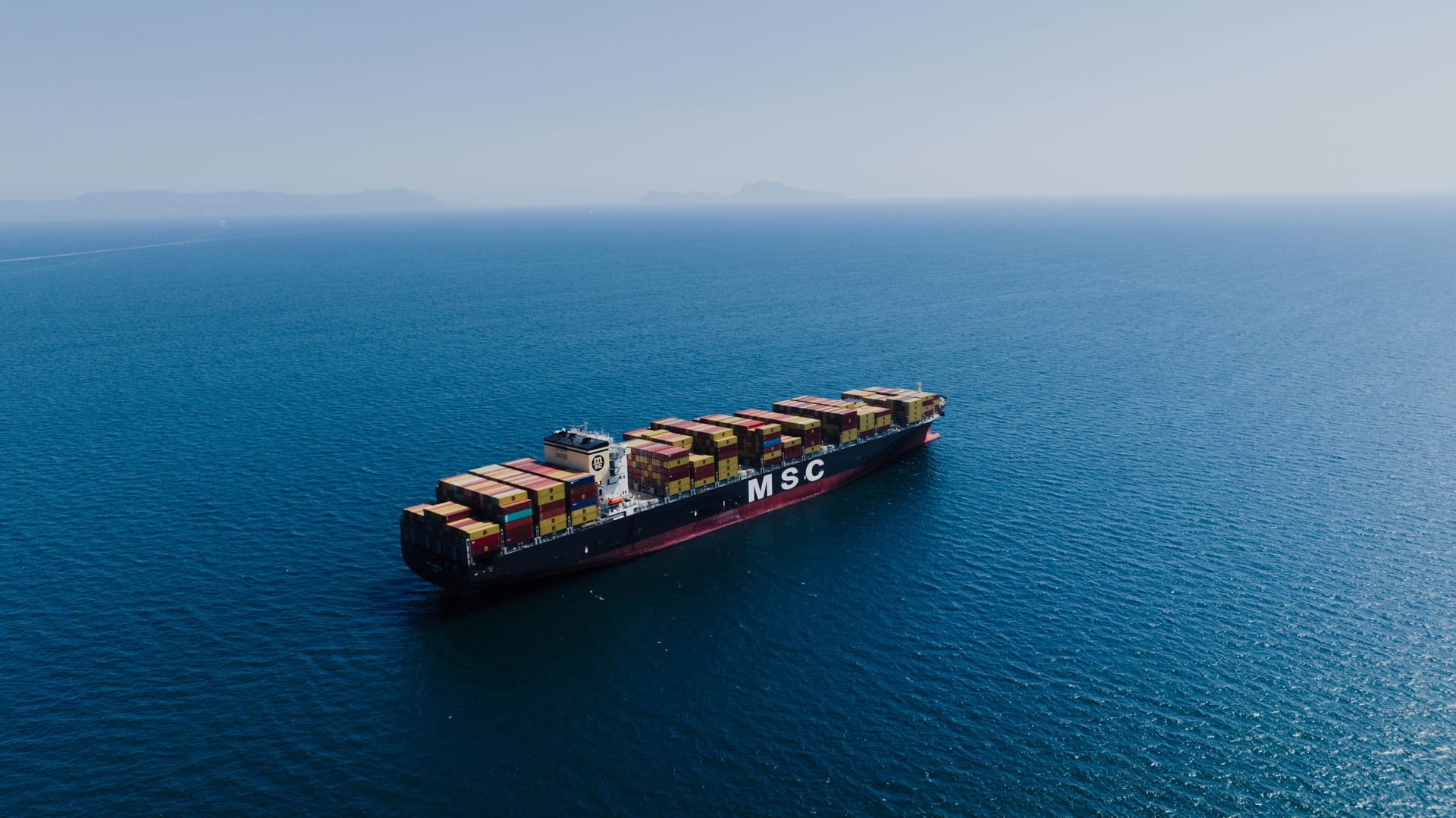
Containers being unloaded from a ship at Chittagong port, Bangladesh

Importers.

The import side is yours. The distribution side is ours. Once produce lands in Bangladesh, Fashol moves it through the country's largest downstream network.

0
Mudi shops served
0
Restaurants including Domino's
0
Supershop outlets including Shwapno

Landing produce in Bangladesh is the easy part.

An importer's job used to end at the Chittagong port: clear the container, handle paperwork, warehouse it, sell into the wholesale market at that week's price. Distribution was someone else's problem - aratdars, traders, resellers - each taking a margin while the importer kept what was left.

That model has failed for years. Wholesale prices on imported produce swing 20 percent in a week, and the cold chain breaks once the container leaves the port. Apples from Washington or onions from India pass through four hands, three temperature zones, and two weeks of transit before reaching a shelf. Quality variance kills margin; spoilage kills volume. The importer carries the risk from LC to landing, then hands the chain to traders they cannot see into.

The import side of this trade is not the problem. The distribution side is.

One container. One delivery cycle.

A full container absorbed by Fashol's network and delivered to end buyers - restaurants, supershops, quick commerce, mudi shops - within one cycle. No middlemen, no cold-chain breaks, no margin lost to hands you cannot see.

Four reasons to stop selling into the wholesale market.

Downstream reach, cold-chain distribution, live demand visibility, and quality routing. Every Fashol delivery cycle is built to absorb landed import volume and move it to end buyers on your behalf.

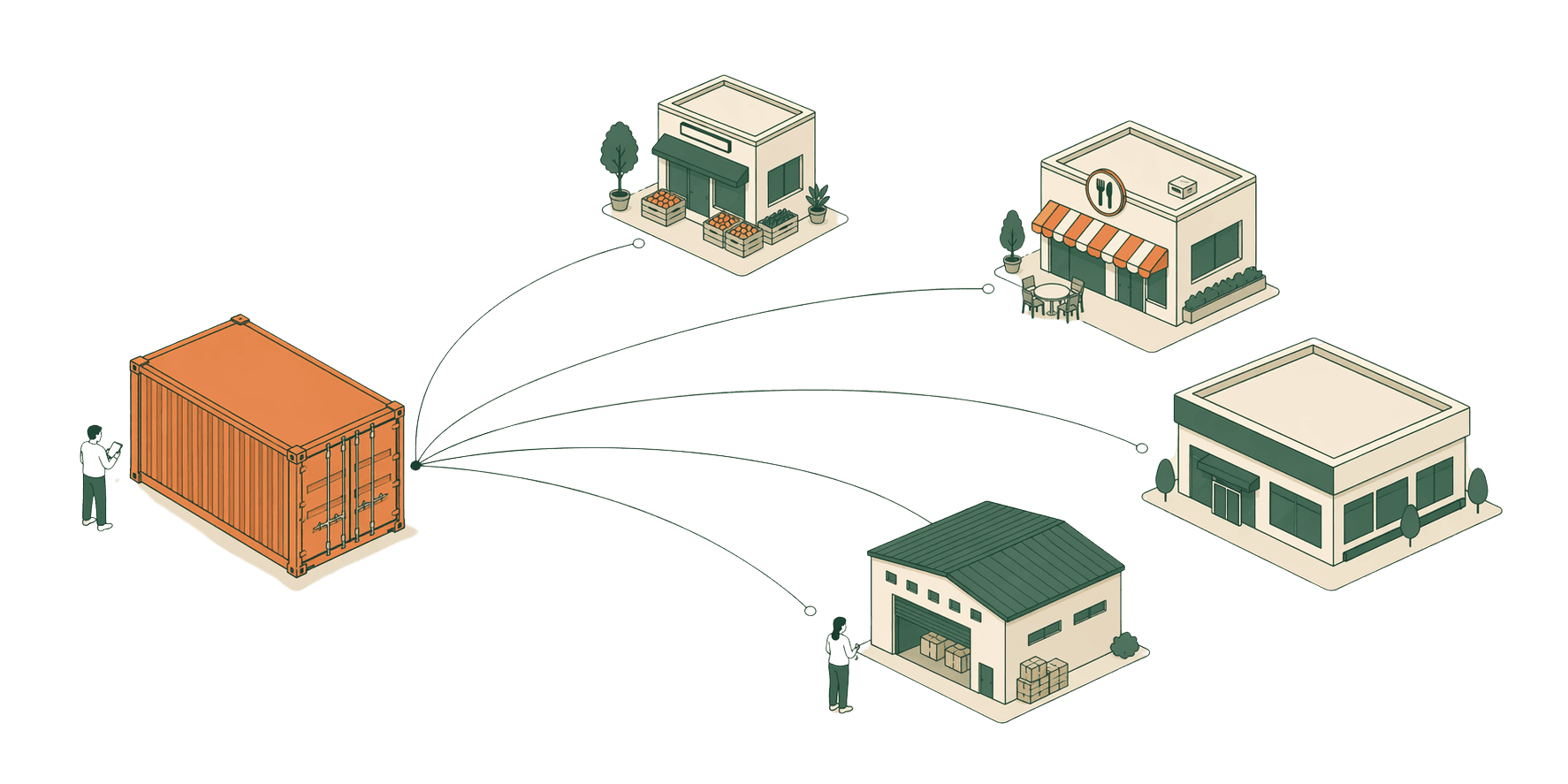
An isometric network diagram showing a port container connected by thin lines to restaurant, shop, and warehouse icons spreading outward

The largest downstream network in Bangladesh.

7,000 mudi shops, 400-plus restaurants including Domino's, 400-plus supershop outlets across Shwapno, Meena Bazar, Agora, Daily Shopping, and every major quick commerce platform. One import, one Fashol handoff, and your volume moves.

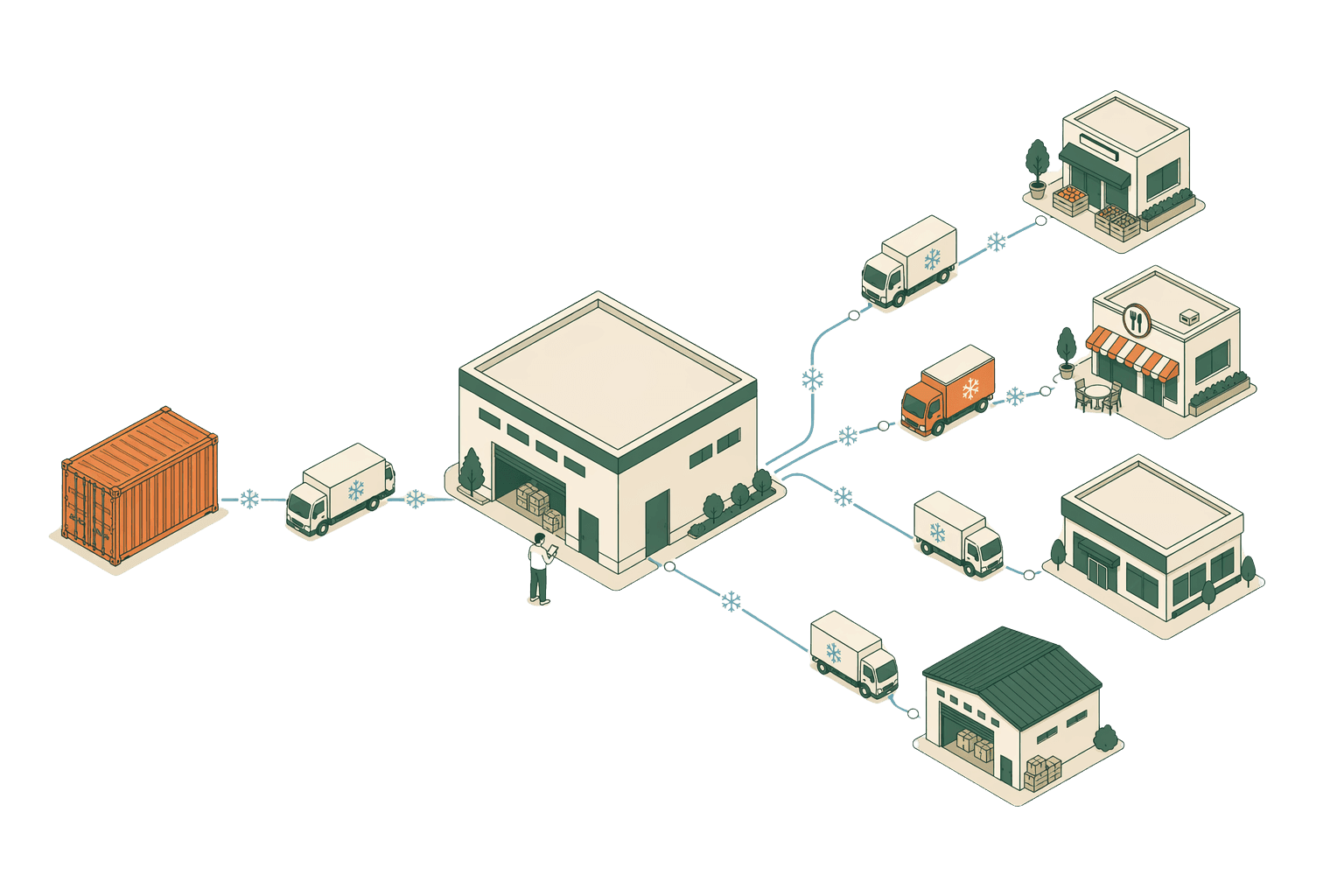
An isometric cold-chain route from a port container to a Fashol hub out to multiple delivery destinations

Cold chain that does not break.

From port clearance to Fashol hub to end buyer, the cold chain holds. Apples arrive at the restaurant the same grade they landed in Chittagong. Onions arrive at the supershop without shrinkage. Spoilage stops being a line item.

Full container

Absorbed and distributed by Fashol's network in a single cycle. No wholesale market dumping, no multi-week storage, no margin bleed.

An isometric tablet showing demand indicators and charts with small icons representing restaurant, supershop, and quick commerce buyers

Demand you can see before you import.

Hyperfarm's downstream book tells you what restaurants, supershops, and quick commerce platforms are buying this week, at what price, in what volume. Stop opening an LC on guesswork. Import against demand you have already measured.

Same-day

Settlement on delivered volume once produce reaches the end buyer. Working capital turns faster, not slower.

Your volume lands once. It moves everywhere.

The product behind this work.

Hyperfarm

The buyer procurement desk. Importers use Hyperfarm to see live downstream demand across restaurants, supershops, and quick commerce platforms, and to plan import volumes against real buying signals.

“We used to land a container and then spend three weeks trying to clear it through wholesale traders who paid us less each time. Since joining Fashol, a container lands on Monday and by Friday the full volume is delivered to supershops, restaurants, and retail shops with settlement done. I stopped being an importer with a warehouse problem. I am just an importer now.”
Farhan ChowdhuryDirector, fresh produce import, Chittagong

Your next container lands. Fashol takes it from there.

Importers do not need onboarding weeks. Fashol's import desk works around your next landing container. Day one is the conversation - what you import, who you sell into, your volume. Day two, your first cleared container enters Fashol's distribution network. Distribution then runs on its own.

01

The conversation.

A Fashol import representative walks through your typical import book - origin countries, produce mix, container frequency, current wholesale trader relationships. One conversation, usually by phone.

02

Next container landing.

For your next cleared container, Fashol's import desk picks up from port clearance. Produce moves to the nearest Fashol hub for grading and routing.

03

Distribution across the network.

The full container volume is allocated across Fashol's downstream book - supershops, restaurants, quick commerce, mudi shops - based on current demand and pricing. Cold-chain delivery to every end buyer within the cycle.

04

Settlement and forward planning.

Same-day settlement on delivered volume. Your next import decision is made against Hyperfarm demand data, not against a wholesale market guess.

The rest of the trade side runs on Fashol too.

Exporters

End-to-end export corridors to the UK, Europe, the Middle East, and Southeast Asia.

Wholesalers

A modern supply stack behind the wholesale trade, with 50-district sourcing and same-day settlement.

Commission agents

Traditional arotdars on a modern stack, with transparent pricing and digital settlement.